





Designers, brands and stars: a journey through fashion from 1955 to 1975
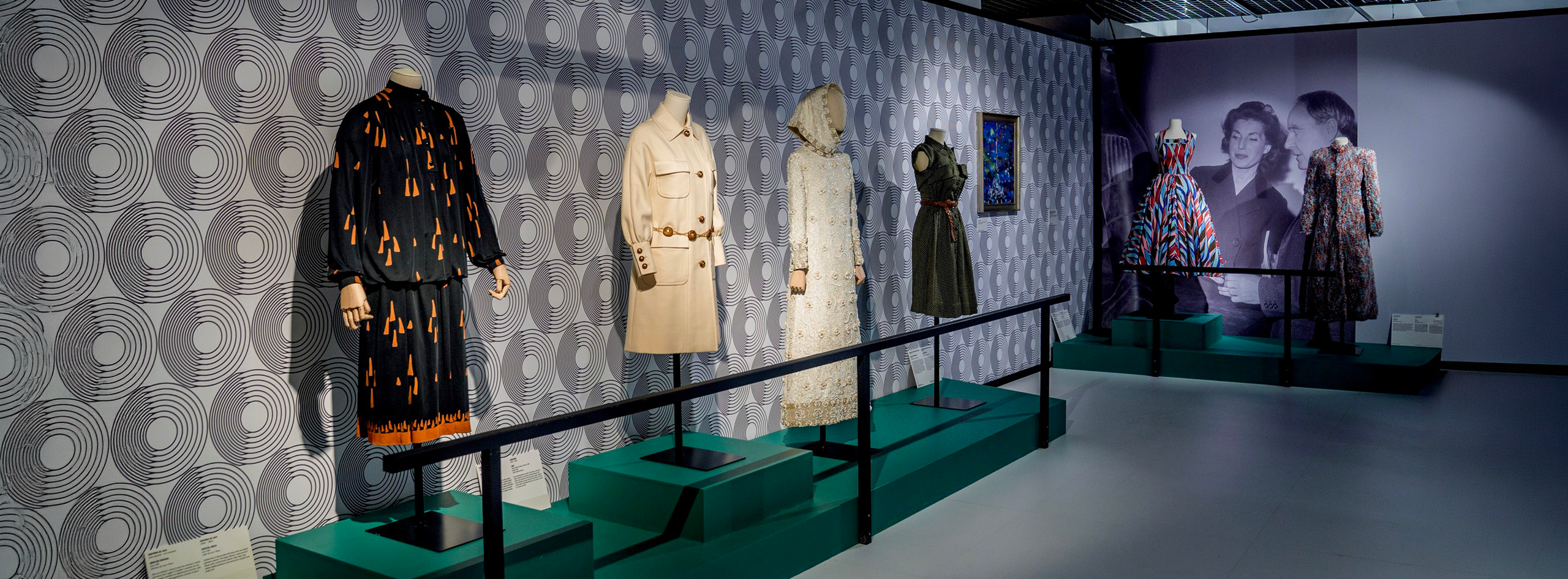
This journey through the twenty years from 1955 to 1975 pays tribute to the period when Rome became the capital of fashion, where the destinies of great haute couture designers, film stars, small workshops and ateliers were interwoven. This period, rich in creative energy and references to made in Italy, is captured by the multimedia exhibition Moda in Luce 1955-1975 – Roma fra glamour e innovazione industriale (26 June – 15 November), staged at the Musei Capitolini, Centrale Montemartini, organised by Archivio Luce Cinecittà with the Ministry of Culture, and curated by Fabiana Giacomotti.
The exhibition is the “second chapter” of “Moda in Luce 1925–1955. Alle origini del Made in Italy”, hosted at the Museo della Moda e del Costume at Palazzo Pitti in Florence, which we covered in our dedicated article ‘Exhibition on the origins of Made in Italy’. The Roman event, entirely new in terms of works, staging and themes, continues the story of a legend, in its transition towards consecration and explosion.
The early 1950s marked a period of great change and dynamism for Italy, with fashion and cinema becoming two of Rome’s defining hallmarks. On one hand, Cinecittà transformed into the Hollywood on the Tiber; on the other, the proliferation of tailoring houses, small workshops and ateliers linked two worlds that discovered themselves to be closely related and synergistic, allowing Italy to exert a profound cultural influence on the international stage, redefining the canons of taste and style.

Sophia Loren ed Emilio Federico Schuberth in the designer’s studio in via XX Settembre, Rome, 1957
(Archivio Storico Luce, Fondo Vedo)
The exhibition route immerses visitors in 150 period photographs, most of them from the Archivio Storico Luce, five video stations featuring footage that is often rare and, until now, unavailable to the public, objects, documents, fabrics and 27 original garments, most of them previously unseen, created by legendary names such as Valentino Garavani, Karl Lagerfeld for Fendi, Federico Forquet, Sorelle Fontana, Giovanna Caracciolo-Carosa, Simonetta Visconti, Irene Galitzine, Fernanda Gattinoni, as well as Roberto Capucci, Maria Antonelli, Patrick de Barentzen, Renato Balestra, André Laug, Emilio Federico Schuberth, Gabriellasport, Antonio De Luca, Angelo Litrico, Domenico and Agostino Caraceni, Pino Lancetti and Laura Biagiotti.
The images tell of catwalk shows, ateliers, reportage, interviews, the jet-set, work and glamour, craftsmanship and art. Alongside it all, cinema makes Rome a temple, lending fashion its dreams and its bodies. Those of Sophia Loren, Audrey Hepburn, Liz Taylor, Lucia Bosè, Kirk Douglas, Charlton Heston, Sean Connery, Elsa Martinelli, Anita Ekberg, Anna Magnani, Ingrid Bergman, Gabriele Ferzetti and Rod Steiger.


Through garments and images, the exhibition sums up the most significant moments that defined the glamour of that period: Valentino’s first fashion show in 1959, the wedding of Tyrone Power and Linda Christian in 1949 — the official birth certificate of the “dolce vita” — with the bride in Sorelle Fontana and the groom in Caraceni, Anita Ekberg’s dip in the Trevi Fountain in La Dolce Vita, Galitzine’s palazzo pyjamas, Lucia Bosé becoming Sarli’s muse, and many other examples that bear witness to the revolution-evolution undertaken by Italian fashion, from couture to prêt-à-porter. In the background, yet always a protagonist in its own right, is Rome and its landmarks — the eternal city that knows how to adapt to the times. Every location becomes a catwalk, a stage for new geometries set against ancient spaces such as marble.


