





When value lives on beyond the (re)sale
In London, since 1999, an exchange has priced wine the way a stock exchange prices shares: Liv-ex tracks in real time what a case of Bordeaux is worth years after it left the cellar. For the producer, that price remains almost always invisible. Value keeps moving, out of sight.
Something similar is happening in footwear, on a larger scale. According to Deda Stealth, 30% of a product’s lifecycle now plays out beyond the brand’s control. The global second-hand market is heading towards $350 billion by 2028 and is growing eleven times faster than traditional retail; 63% of Gen Z consumers, Harris Poll reports, have already bought second-hand. For many brands, second-hand has become the first point of entry to the brand.
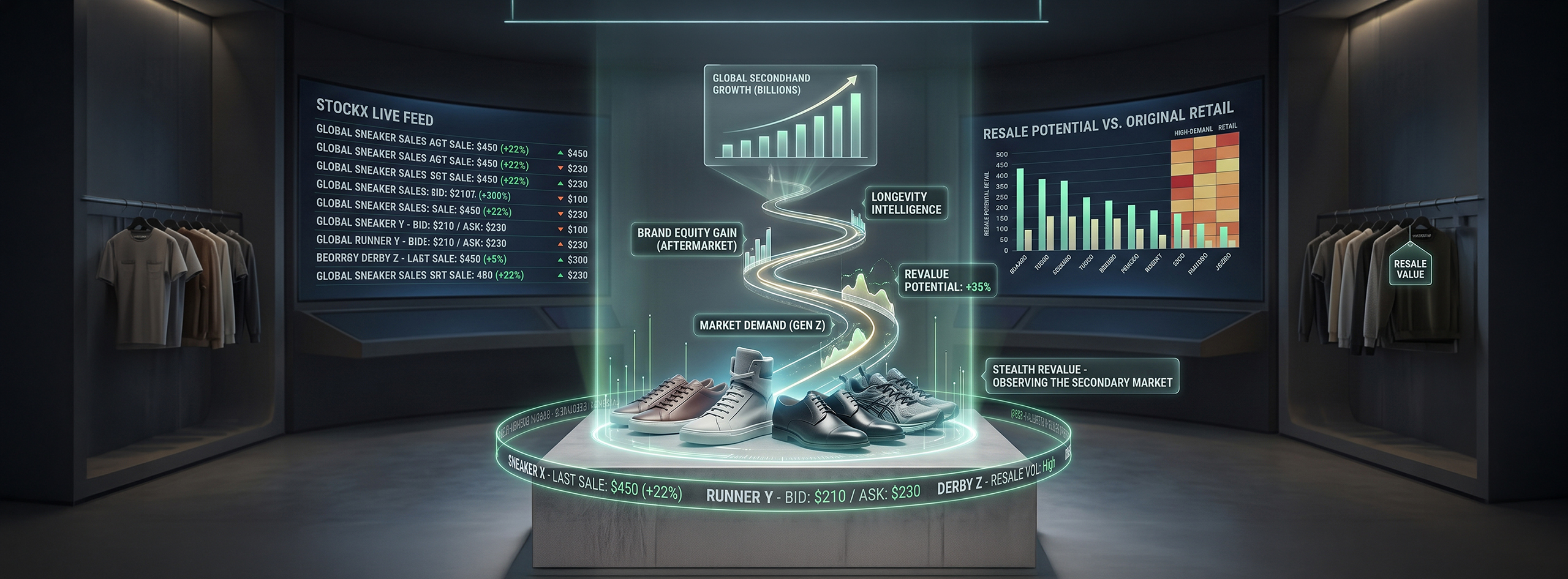
It’s this blind spot that Stealth Revalue targets, the SaaS platform developed by Deda Stealth (Deda Group) through the integration of Competitoor, a price intelligence company acquired in 2025. Machine learning models read prices, availability and trends across second-hand marketplaces, working across five fronts: market intelligence, brand equity, Gen Z engagement, unsold-stock allocation and longevity intelligence — the analysis of how a product retains value over time. The figures put forward are striking: up to 20% margin recovery on repositioning unsold stock, a 10% cut in storage costs, and up to 35% greater efficiency on marketing. “Not knowing what happens to your products after the first sale means giving up strategic insight into desirability and perceived value,” sums up Maurizio Catellani, CEO of Dispell Magic (Competitoor).
A distinction is worth making here, though, to avoid confusion. An already mature market handles resale logistics on brands’ behalf: Reflaunt (Balenciaga, COS), Trove (Patagonia, Levi’s), Archive (The North Face, New Balance), and in Europe Recurate and Faume. Stealth Revalue occupies the still rare territory of observation. Its closest points of comparison are StockX, which prices sneakers and streetwear with an almost stock-market logic, and The RealReal, which each year measures how well luxury brands retain value over time; along the same lines, Vestiaire Collective focuses on data and reporting aimed at brands. In the background sit the desirability indices from Lyst, the pricing from EDITED, the forecasting from Heuritech and the authentication from Entrupy.
The point is that extending a product’s life through second-hand resale stops being just a strong sustainability value and becomes numbers. A product that can be tracked after sale is a product that can be designed better beforehand. It’s a product on which margins can be managed better. A pool of information that can be used to shape collections with a deeper understanding of the market and consumers.
The sea, not just to beat the stifling heat, but also as a source of inspiration for sustainable ideas. Projects we’ll be talking about next week.